

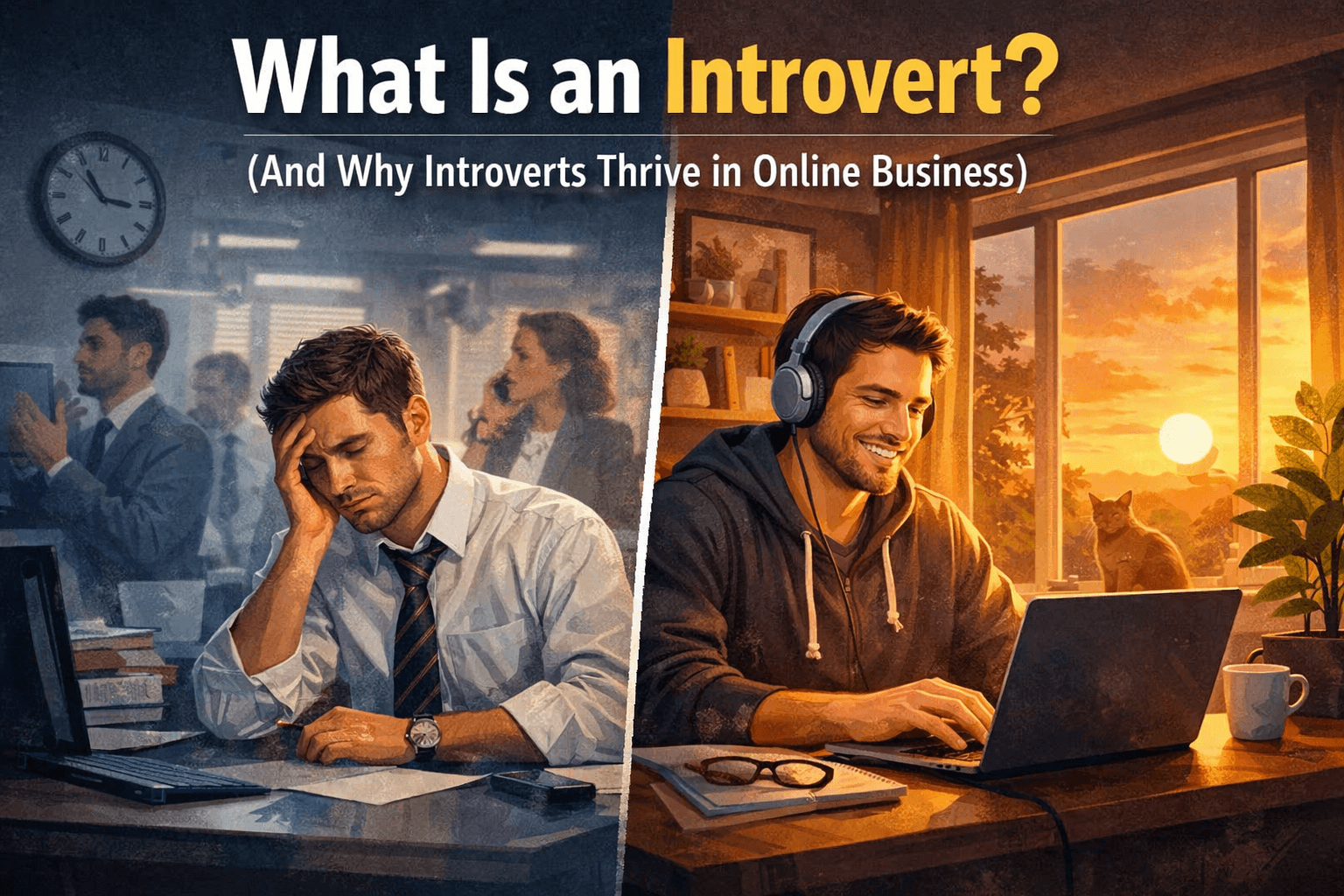
Most people misunderstand what it truly means to be an introvert.
They assume introverts are shy, antisocial, or lack confidence but that definition is not only incomplete, it is often wrong.
So, what is an introvert really?
An introvert is someone who recharges their energy by spending time alone, rather than through constant social interaction. This has nothing to do with intelligence, ambition, or leadership. In fact, many introverts are highly focused, creative, and deeply strategic thinkers.
Yet, in a world built around meetings, office chatter, and nonstop collaboration, many introverts find themselves feeling mentally drained especially in traditional 9–5 work environments. They perform well, meet deadlines, and stay productive, but internally, the constant social demands can be exhausting.
This is why more introverts are quietly shifting toward online business and digital work. Unlike traditional workplaces, online business allows introverts to work independently, think deeply, and create value without the pressure of constant social interaction.
And that is where their true strengths begin to shine.
The Misunderstood Truth About Introverts
There are many introvert myths that have shaped how society views the introvert personality and most of them are inaccurate.
For years, introverts have been labeled as shy, antisocial, awkward, or lacking confidence. If you prefer quiet spaces over loud parties, people assume something is wrong. If you think before you speak, you’re seen as “too quiet.” If you enjoy being alone, you’re described as distant.
But none of these assumptions define what an introvert truly is.
Being an introvert does not mean you lack social skills. It does not mean you hate people. It does not mean you are insecure. Some introverts are incredible public speakers. Others are natural leaders. Many simply prefer depth over noise.
The problem is that modern culture often rewards extroverted behavior. In school, students who speak up quickly are praised. In corporate offices, those who dominate meetings are often viewed as more confident or capable. Networking events celebrate high energy and constant interaction.
Meanwhile, introverts who may be observing, analyzing, and thinking deeply are overlooked.
This creates confusion, especially early in life. Many people grow up believing something is wrong with them because they don’t thrive in loud classrooms or socially demanding workplaces. They may excel academically or professionally yet still feel drained or out of place.
If you’ve ever left a social gathering feeling completely exhausted…
If you’ve ever preferred meaningful one-on-one conversations over group chatter…
If you’ve ever needed alone time to “reset” after a long day…
These are not flaws.
They are signs you are an introvert.
And more importantly, they are signs of strengths that are often misunderstood not weaknesses that need fixing.
The truth is, the introvert personality is not a limitation. It is simply wired differently. And once you understand that difference, everything begins to make sense.
What Is an Introvert? (A Clear Definition)
So, what is an introvert exactly?
At its core, the introvert meaning has nothing to do with being shy or antisocial. An introvert is someone who primarily recharges their mental and emotional energy by spending time alone. While social interaction can be enjoyable, it often requires energy rather than restoring it.
This definition is rooted in personality psychology. The concept of introversion was popularized by Swiss psychiatrist Carl Jung in his 1921 book psychological types , where he described introverts as individuals who direct their energy inward toward their thoughts and inner world. Instead of being energized by external stimulation, introverts feel most balanced when they have space to reflect, think, and process internally.
Understanding the difference between introvert vs extrovert personalities comes down to energy flow.
Extroverts tend to gain energy from social environments. Group discussions, collaboration, and high levels of interaction often stimulate them. After spending time with others, they may feel energized.
Introverts are different. Social interaction isn’t necessarily unpleasant but it can be draining over time. After a long meeting, networking event, or crowded gathering, many introverts feel the need to step away and recharge alone.
This is why recharging alone is the defining trait of introversion not social fear.
It’s also important to clarify something that causes widespread confusion:
Introvert does not mean shy.
Shyness is related to fear of social judgment. Introversion is related to energy management. A person can be confident, articulate, and socially skilled and still be an introvert. Likewise, an extrovert can experience shyness.
When people confuse these two concepts, they create unnecessary stigma around the introvert personality. But once you understand the true definition, it becomes clear: introversion is not about avoiding people it’s about how you restore your energy.
And that difference matters, especially when choosing the kind of work and lifestyle that aligns with who you are.
Common Traits of Introverts
Some common introvert traits include deep focus, a preference for meaningful conversations, and an independent working style. If you recognize these patterns in yourself, they could be signs you are an introvert. Introverts often excel at observation and listening, which are among the core strengths of introverts. Understanding these traits can help you recognize your own strengths and habits. While every introvert is unique, these patterns are commonly observed.
Deep Focus and Concentration
Introverts excel at deep work, solving complex problems, and producing thoughtful, high-quality results.
Preference for Meaningful Conversations
Small talk can feel draining, but introverts thrive in one-on-one or small-group conversations that are meaningful.
Independent Working Style
Introverts are self-motivated and work best independently, allowing them to excel in autonomous roles or businesses.
Strong Observation and Listening Skills
Many introverts are highly observant and thoughtful, noticing subtle details that others might miss.
Mental Exhaustion from Excessive Social Interaction
Large gatherings or noisy offices can be draining. Recognizing this is crucial to honoring their energy.
These traits are not limitations they are powerful strengths that introverts can leverage, especially in environments that value focus, creativity, and strategic thinking.
Why Traditional 9–5 Jobs Drain Introverts
Many people start researching what is an introvert when they notice how drained they feel in traditional office settings. The modern workplace often prioritizes constant interaction, open office layouts, and frequent meetings all of which can be overwhelming for the introvert personality.
For introverts in corporate jobs, the biggest challenge is not lack of ability, but the work environment itself. Noise overload, forced collaboration, and limited quiet time make it harder to access deep focus, even when productivity is high. Unlike extroverts who gain energy from social interaction, introverts recharge through solitude and uninterrupted work.
This mismatch explains why many high-performing introverts experience burnout despite doing their jobs well. The typical introvert work environment should include autonomy, flexibility, and space for independent thinking. Without these, even the best jobs for introverts can feel exhausting rather than fulfilling.
Frequent meetings and forced collaboration add another layer of stress. Introverts excel in deep, focused work, but being pulled into back-to-back discussions leaves little time for reflection or meaningful contribution. Without quiet, uninterrupted time, productivity suffers not because introverts are incapable, but because their work style doesn’t match the typical corporate rhythm.
The result? Mental fatigue, subtle burnout, and the feeling of being “out of sync” with the workplace culture. Even when hitting all deadlines, introverts may leave the office feeling drained rather than energized.
Understanding your introvert work environment is the first step toward choosing roles or careers that honor your energy. Knowing the best jobs for introverts and how to navigate introverts in corporate jobs can make a world of difference.
Why Introverts Thrive in Online Business
Introverts are uniquely positioned to excel in the digital economy, especially when building an online business for introverts. Unlike traditional office jobs, online work allows them to create and manage their business independently, giving them the freedom to structure their day around deep focus rather than constant social interaction.
One of the biggest strengths of introverts is the ability to leverage deep concentration for higher productivity. Introverts can dive into tasks like content creation, strategy, or research without interruption, producing high-quality results efficiently. This makes them highly effective introvert entrepreneurs who can scale their efforts quietly and strategically.
Online business also reduces social exhaustion. Unlike corporate environments, introverts can minimize meetings, networking events, and other energy-draining interactions, making work from home for introverts not just possible but ideal.
Many introverts excel at building faceless or low-visibility brands, such as blogs, digital products, or niche social media pages, where their creativity and strategic thinking shine without needing constant attention. Their natural skills in observation, research, and thoughtful decision-making make them particularly successful in digital business for introverts, giving them a competitive edge over those who rely solely on extroverted networking.
Best Online Business Models for Introverts
If you’ve ever wondered, “What business can I actually start as an introvert?” there are several options perfectly suited to your strengths.
Digital Products (E-books, Templates, Courses)
Creating digital products allows introverts to work independently, scale their income, and minimize social interaction. From e-books to online courses, these products generate passive income for introverts while leveraging your expertise.
Faceless Content Creation (YouTube, Blogs, Theme Pages)
Introverts can thrive in content creation for introverts without ever putting their face on camera. Faceless blogs, YouTube channels, and niche social media pages let you share knowledge creatively, independently, and with minimal social pressure.
Affiliate Marketing
This strategy focuses on behind-the-scenes work, analytics, and strategy rather than direct selling. Many introverts succeed with affiliate marketing for introverts as a low-stress online side hustle for introverts.
Freelancing (Remote & Skill-Based Work)
Skills like writing, graphic design, social media management, and digital marketing translate perfectly into freelance jobs for introverts or remote work for introverts, giving autonomy and flexibility.
Blogging & Niche Websites
Introverts can build authority and influence through blogging for introverts or niche websites. Long-form content plays to your deep-thinking strengths and allows you to monetize without constant visibility, making it one of the best online business ideas for introverts.
These models let introverts leverage their natural skills while creating sustainable, fulfilling businesses on their terms.
Conclusion
Understanding what is an introvert is more than just a personality label, it is a powerful step toward choosing a lifestyle and career that aligns with your natural energy. Introverts are not shy, antisocial, or less capable; they simply thrive in environments that allow deep focus, independence, and meaningful work.
This is exactly why online business for introverts is rapidly growing. From digital products and blogging to affiliate marketing and freelancing, the digital world rewards strategic thinking, creativity, and self-driven work all core strengths of an introvert entrepreneur.
Instead of forcing yourself into draining environments, the smarter path is to build a digital business for introverts that supports your energy, not depletes it. When introverts embrace their natural strengths, working from home and building an online business becomes not just sustainable, but highly profitable.
Understanding your introvert personality isn’t just self-awareness it’s the first step toward creating a business and lifestyle that works for you.
If you’re an introvert ready to turn your strengths into income, start your journey today. Explore online business ideas for introverts, find the right model for your skills, and begin building a sustainable, low-stress business that fits your lifestyle.
Tip: If you want a step-by-step guide for building a faceless online business as an introvert, click here to join my free training/webinar and start turning your quiet strengths into profit.
FAQs
Q1: What is an introvert?
An introvert is someone who recharges by spending time alone rather than through constant social interaction. It’s about energy management, not shyness.
Q2: Can introverts succeed in online business?
Absolutely. Online business allows introverts to work independently, leverage deep focus, and create income with minimal social exhaustion.
Q3: What are the best jobs for introverts?
Roles that allow autonomy and minimal constant interaction like digital products, freelancing, blogging, affiliate marketing, and remote work are ideal.
Q4: What skills do introverts bring to entrepreneurship?
Introverts excel in research, observation, strategy, and deep thinking, making them natural introvert entrepreneurs in the digital space.
Q5: How do introverts balance social interaction while working online?
They can structure their schedule to limit meetings, automate communication, and use faceless or remote business models, minimizing energy-draining interactions.
Q6: What are the signs you are an introvert?
Some clear signs you are an introvert include preferring meaningful one-on-one conversations over large social gatherings, needing alone time to recharge after social interactions, and enjoying deep focus on tasks or personal projects. Introverts often notice details that others overlook, think carefully before speaking, and feel mentally drained after extended periods of social activity. These introvert traits are not weaknesses they are indicators of how your energy and attention naturally work.
Q7: How do introvert traits differ from extroverts?
The main difference between introvert vs extrovert personalities lies in energy flow. Introverts gain energy from solitude and reflection, while extroverts are energized by social interaction and external stimulation. Introvert traits often include deep thinking, strong observation skills, independent working style, and preference for meaningful conversations. Extroverts, on the other hand, thrive on social engagement, fast-paced environments, and collaborative teamwork. Understanding these differences helps introverts choose work, hobbies, and lifestyles that align with their natural strengths.